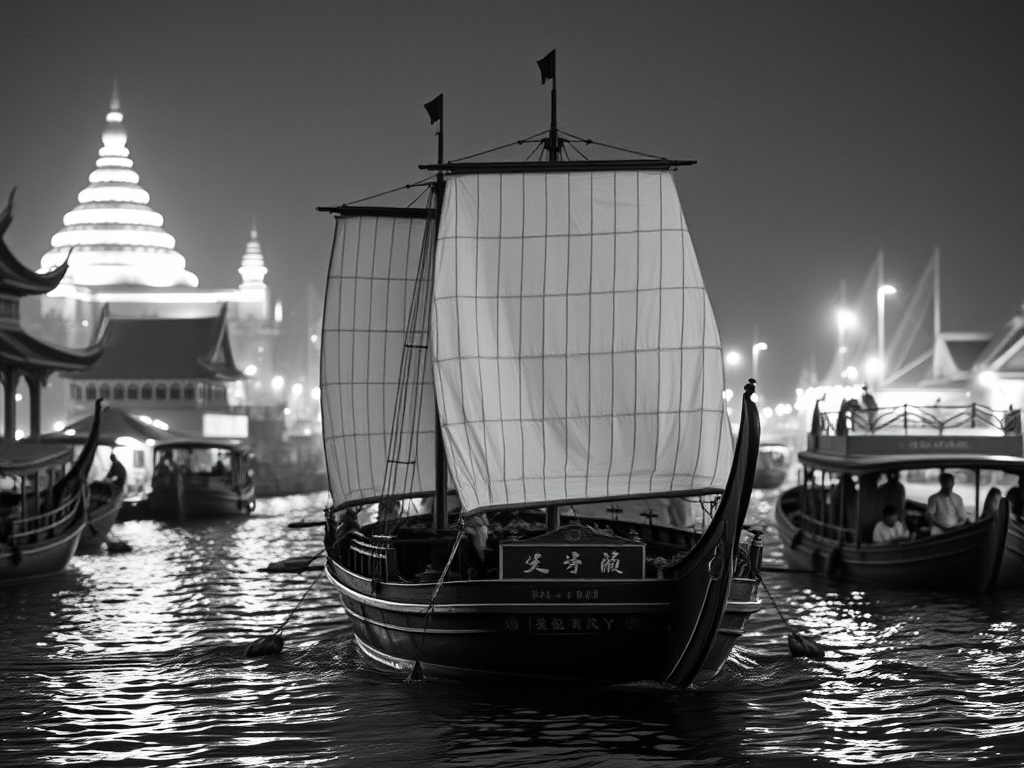
Maritime trade between China and Thailand has evolved significantly from 1000 AD to the end of the 20th century, influenced by technological advancements, political changes, and economic developments.
Early Trade (1000-1400 AD)
By 1000 AD, Chinese maritime technology had advanced significantly, with innovations such as the stern-post rudder, marine compass, and watertight compartments1. These advancements enabled Chinese merchants to engage in extensive trade across the South China Sea. During this period, the Song Dynasty (960-1279) saw a flourishing of maritime trade, with Chinese junks traveling to Southeast Asia, including Thailand, then known as Siam1. Chinese merchants traded silk, ceramics, and metalware for Thai products like rice, spices, and tropical hardwoods.
The Ming Dynasty and Zheng He’s Voyages (1405-1433)
A significant milestone in Sino-Thai maritime trade was the series of voyages led by the Chinese admiral Zheng He during the early Ming Dynasty (1368-1644). Between 1405 and 1433, Zheng He led seven expeditions to Southeast Asia, South Asia, and beyond, establishing Chinese presence and fostering trade relations1. These voyages brought Chinese goods such as silk, porcelain, and tea to Siam, while Thai products like spices, ivory, and tropical hardwoods were exported to China. These expeditions not only enhanced trade but also established diplomatic relations and cultural exchanges.
The Ayutthaya Period (1350-1767)
The Ayutthaya Kingdom, established in 1350, became a major trading hub in Southeast Asia. Chinese merchants were prominent in Ayutthaya, trading goods such as ceramics, silk, and metalware for Thai products like rice, tin, and tropical fruits2. The strategic location of Ayutthaya near the Chao Phraya River facilitated easy access for Chinese ships, enhancing trade relations. The Ayutthaya period marked the beginning of more structured and regular trade relations between the two regions.
The Qing Dynasty and Legalization of Trade (1684 Onwards)
In 1684, the Qing Dynasty (1644-1912) legalized private commercial voyages, leading to a significant increase in direct trade between China and Southeast Asia2. This policy allowed Chinese merchants to sail directly to Thai ports, bypassing intermediary trade hubs. The increased trade volume strengthened economic ties and facilitated cultural exchanges. Chinese merchants brought goods such as silk, porcelain, and tea to Thailand, while Thai merchants exported rice, tin, and tropical fruits to China.
19th Century: Western Influence and Migration
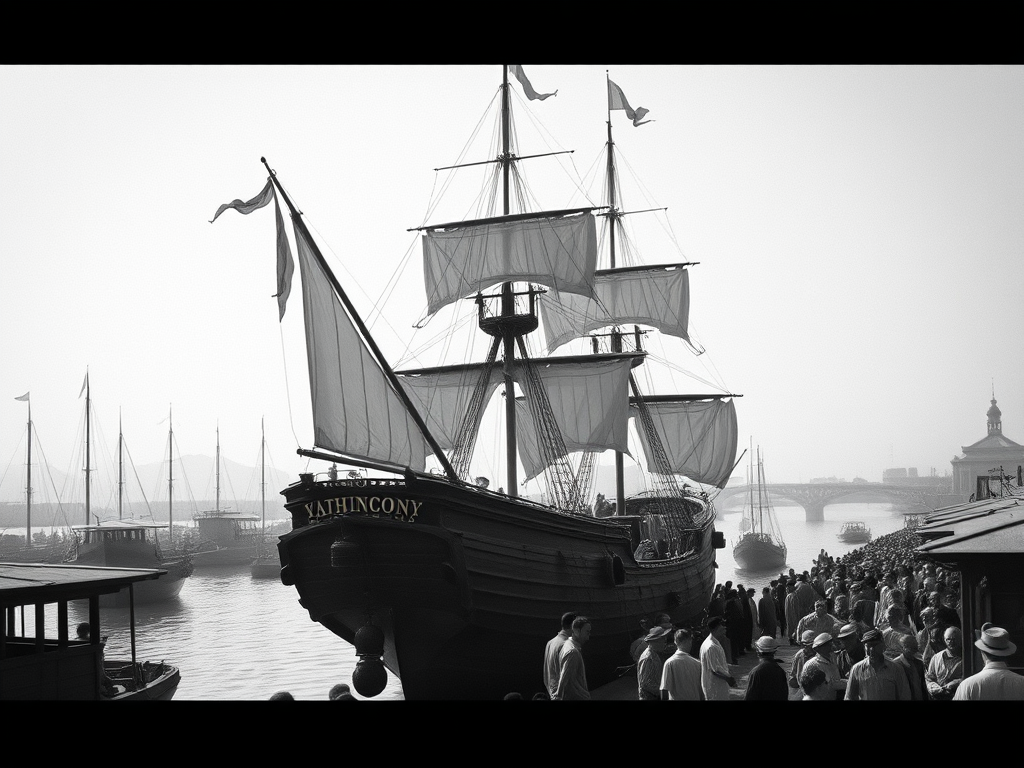
The 19th century brought significant changes due to Western colonial influence and the opening of new trade routes. The Bowring Treaty of 1855 between Siam and the United Kingdom opened Siam to international trade, indirectly benefiting Chinese merchants3. This period also saw a large influx of Chinese immigrants to Thailand, who played a crucial role in the local economy and trade. Chinese merchants established businesses and integrated into Thai society, further strengthening trade relations.
Early 20th Century: Political Changes and Economic Growth
The early 20th century saw both China and Thailand undergoing significant political changes. The fall of the Qing Dynasty in 1912 and the establishment of the Republic of China, along with Thailand’s modernization efforts, led to new trade dynamics. Despite political upheavals, trade continued to grow, driven by mutual economic interests3. The Chinese community in Thailand continued to play a vital role in trade and commerce, contributing to the economic development of both countries.
Post-World War II Era
After World War II, the establishment of the People’s Republic of China in 1949 and Thailand’s economic development led to a new phase of trade relations. Despite political differences during the Cold War, trade between the two countries continued to expand. By the end of the 20th century, China had become one of Thailand’s largest trading partners3. The bilateral trade included a wide range of goods, with China exporting machinery, electronics, and consumer goods to Thailand, while Thailand exported agricultural products, electronics, and automotive parts to China.
Conclusion
The evolution of maritime trade between China and Thailand from 1000 AD to the end of the 20th century reflects broader regional and global economic trends. From early technological advancements and exploratory voyages to modern economic partnerships, the trade relationship between China and Thailand has been shaped by historical events, political decisions, and economic policies. This enduring relationship continues to play a crucial role in the economic development of both nations.

 Notes Asia