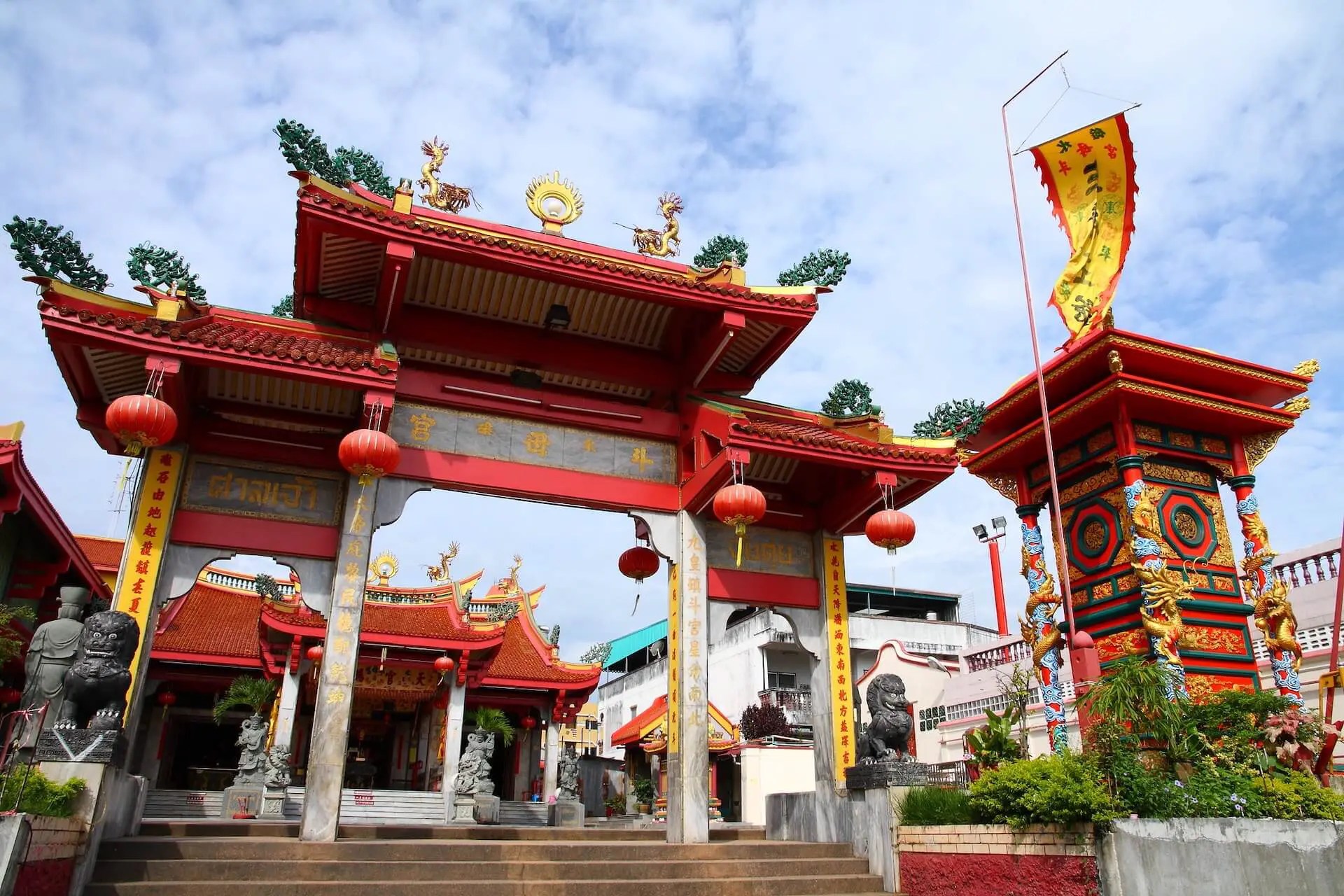
The history of the Chinese diaspora in Phuket is a fascinating tale of migration, economic opportunity, and cultural integration. This narrative spans several centuries and has significantly shaped the island’s identity.
Early Migration and Economic Opportunities
19th Century: The Tin Mining Boom
The most significant wave of Chinese migration to Phuket occurred in the 19th century, driven primarily by the booming tin mining industry². Chinese immigrants, mainly from the Fujian and Guangdong provinces, arrived in large numbers seeking economic opportunities. The Hokkien and Hakka communities were particularly prominent among these early settlers².
These immigrants established vibrant communities centered around commerce, religion, and social activities. They brought with them their unique customs, traditions, and skills, which played a crucial role in the development of Phuket’s economy and society³. The Chinese community’s influence is evident in the island’s architecture, cuisine, and cultural practices.
Establishment of Chinese Communities
The Chinese immigrants in Phuket established their own neighborhoods, known as “jui tui” in the Hokkien dialect³. These areas became centers of commerce and social life, with businesses, temples, and schools serving the local Chinese population. The Phuket Thai Hua Museum, located in the old town area, was originally the first Chinese school in the province, established by Hokkien immigrants¹. This museum now serves as a cultural and educational center, preserving the history and heritage of the Chinese community in Phuket.
Cultural Integration and Influence
The Chinese community in Phuket has had a profound impact on the island’s culture and traditions. One of the most notable contributions is the annual Vegetarian Festival, held during the ninth lunar month of the Chinese calendar². This festival features vibrant processions, rituals, and acts of self-mortification, reflecting the deep-rooted Chinese religious and cultural practices. The Jui Tui Shrine and the Put Jaw Temple are central to these celebrations, serving as important cultural and religious landmarks².
Phuket’s Old Town is another testament to the Chinese influence on the island. The area is characterized by its Sino-Portuguese architecture, colorful facades, and splendid temples². Walking through the alleys and lanes of Old Phuket Town offers a glimpse into the island’s past and the significant role played by the Chinese community in shaping its identity.
Modern Era: Continued Influence and Integration
In recent decades, the Chinese community in Phuket has continued to thrive and integrate into the broader Thai society. The modern era has seen an increase in skilled and urban migrants from China, many of whom come for business, education, or lifestyle reasons². These new migrants have established vibrant communities in various parts of Phuket, contributing to the island’s economic and cultural diversity.
Today, the Chinese community in Phuket is well-established and deeply integrated into all elements of local society. They play a leading role in the island’s business sector and continue to contribute to its cultural and social life. The blending of Chinese and Thai cultures has created a unique and vibrant society that reflects the best of both worlds.
Conclusion
The history of the Chinese diaspora in Phuket is a testament to the enduring connections between China and Thailand. From the early migrations driven by economic opportunities to the modern era of cultural integration, the Chinese community has played a crucial role in shaping the island’s identity. Their contributions to Phuket’s economy, culture, and society continue to be felt today, enriching the island’s heritage and influencing its future development.
If you have any specific aspects of this history you’d like to explore further, feel free to ask!
¹: THAILAND.GO.TH
²: Phuket Lovin
³: Phuket Island Guide
Source: Conversation with Copilot, 08/09/2024
(1) Harmony in Diversity: Phuket’s Chinese Heritage – Phuket Lovin. https://phuketlovin.com/harmony-in-diversity-phukets-chinese-heritage/.
(2) A Short History of Phuket Island in Thailand. https://phuketislandguide.com/phuket-guides/a-short-history-of-phuket-island-in-thailand/.
(3) Historical Tourism: History of the Chinese at Phuket Thai … – THAILAND. https://thailand.go.th/issue-focus-detail/001_02_198.
(4) Phuket, Thailand: A world of its own – National Geographic. https://www.nationalgeographic.com/travel/article/partner-content-phuket-thailand-cultural-fusion-forges-connection.

 Notes Asia